The maritime industry is evolving, and with the rise of digital learning, many new seafarers are asking: “Can I do my STCW course online?” While online learning offers great flexibility, when it comes to the STCW Basic Safety Training (BST), the answer for UK seafarers is a bit more complex. If you are looking to work on a UK-registered vessel or a superyacht, it is vital to understand the requirements set by the Maritime and Coastguard Agency (MCA).
Does the MCA allow online-only STCW Basic Safety courses?
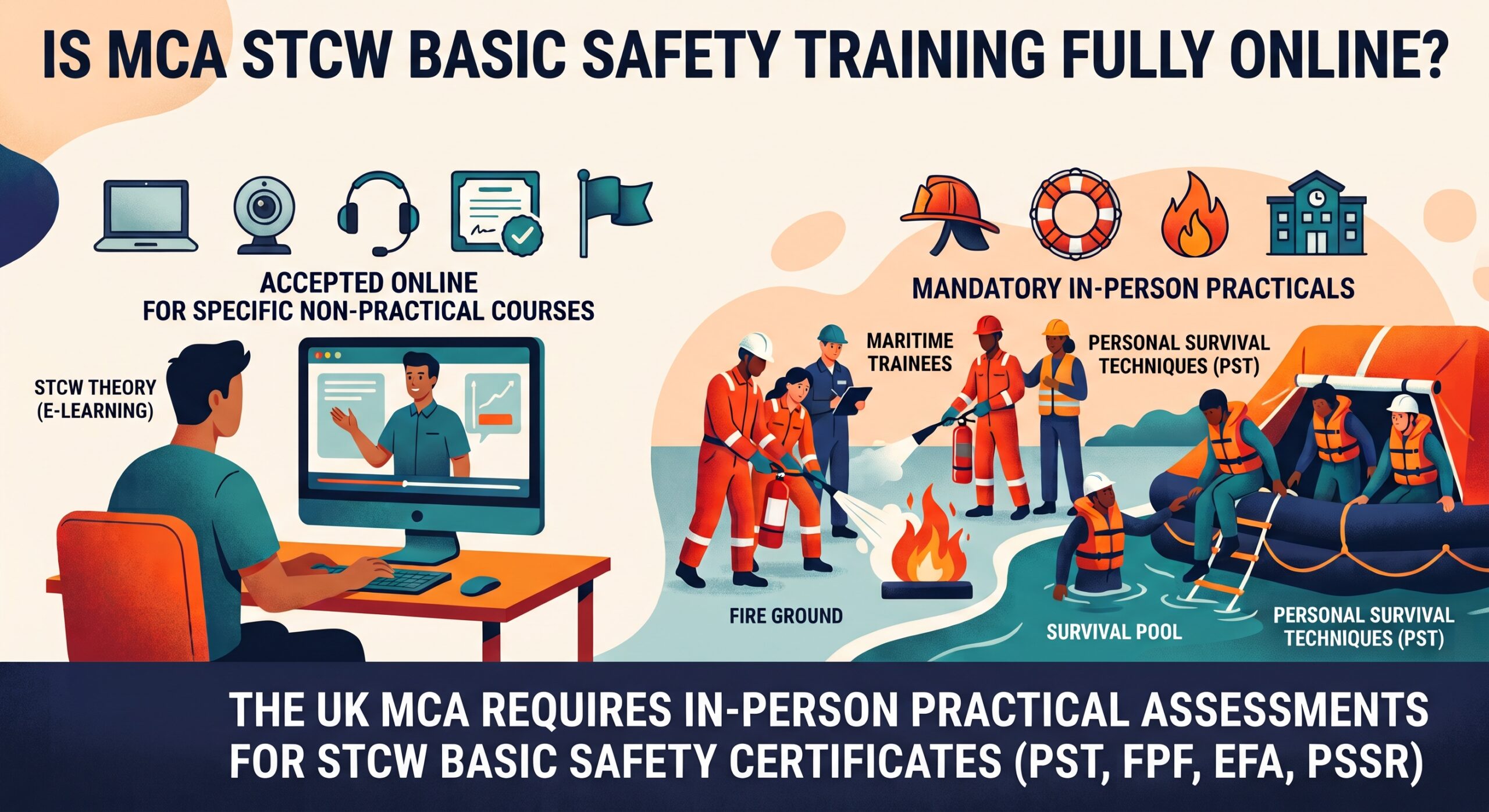
Currently, the MCA does not authorise the full STCW Basic Safety Training to be completed online. While certain theoretical elements or specific modules like Personal Safety and Social Responsibilities (PSSR) or Security Awareness (PSA) might be available in a blended or online format through other flag states, the core safety modules require “wet” and “live” practical elements.
The MCA’s stance is clear: you cannot learn to fight a fire or survive in the open ocean solely through a computer screen. To receive an unrestricted, MCA-approved certificate, you must demonstrate your proficiency in person.
The Risk of “Restricted” Certificates
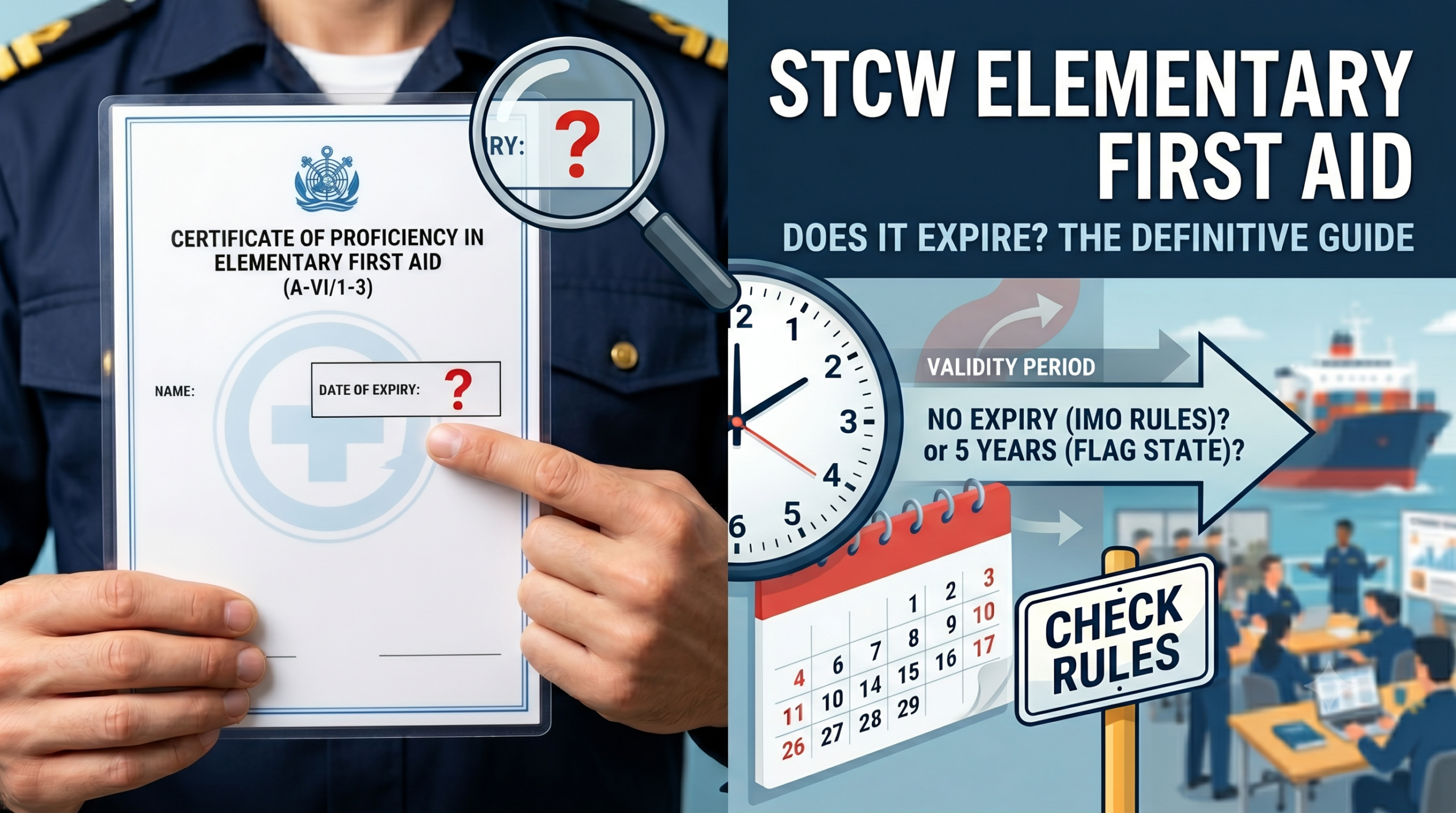
You may find providers offering “Online STCW” certificates through other flag states. They do this by issuing restricted certificates, which explicitly state that the practical elements of the course were not completed. While these might appear cheaper and more convenient at first glance, there is a significant catch:
- Employer Acceptance: Many employers and shipping companies specifically require unrestricted certificates. They are within their rights to refuse “online-only” or “restricted” certificates if they feel the lack of practical training poses a risk.
- The Cost of “Double Paying”: If you arrive at a ship with a certificate your employer won’t accept, you will likely be sent home to complete a full, in-person course. What started as a “cheaper” option can quickly become twice as expensive once you factor in the second course fee and lost wages.
Why In-Person Training is Irreplaceable
At our training centre, we see firsthand why the classroom and practical environment are so valuable. Safety training isn’t just about ticking a box; it’s about preparing for the worst day of your life at sea, and having a great time while doing it.
- Shared Experience & Networking: The maritime world is surprisingly small. Being in a classroom allows you to network with peers from all over the world. These connections often turn into lifelong friendships or even future job leads.
- Expert Storytelling: Our instructors are seasoned professionals. The anecdotes, “near-miss” stories, and real-world advice shared in the classroom bring the subject matter to life in a way a recorded video simply cannot.
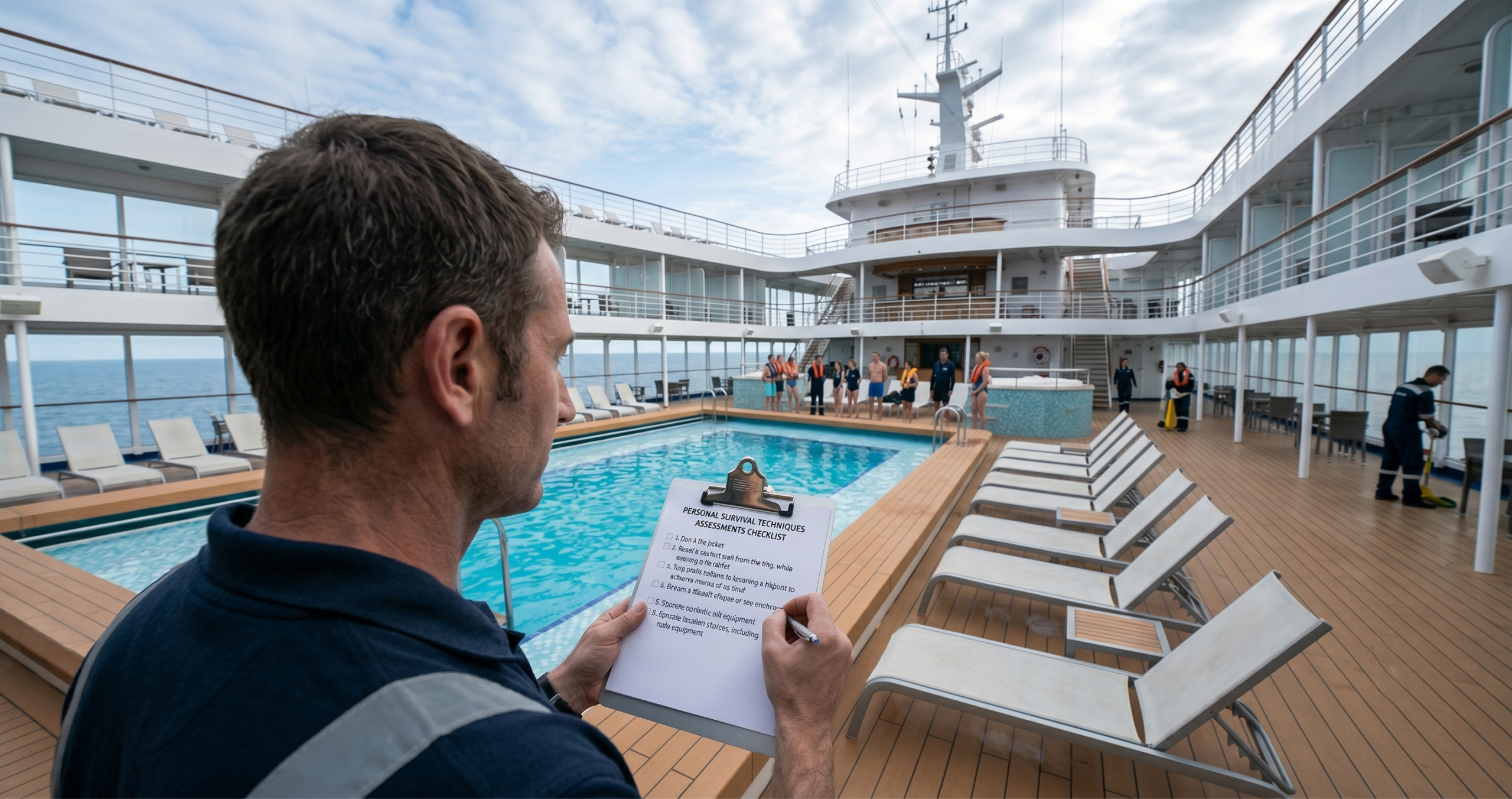
- It’s Genuinely Fun: Let’s be honest, it’s not every day you get to jump into a pool and board a life raft or operate a fire hose to extinguish a fire! It’s a unique, hands-on experience that builds great memories and boosts your confidence.
- Muscle Memory: Stepping into a life raft or using a breathing apparatus in a controlled environment builds muscle memory. In a real emergency, your brain may momentarily freeze, but your body will remember exactly what it did during your training.
A Note on Safety: It would be a terrifying experience to find yourself in a genuine emergency, needing vital survival skills, and realising that your only “experience” was a multiple-choice quiz on a laptop.
People Also Ask (FAQ)
Is online STCW training valid in the UK?
For the full Basic Safety Training (PST, Firefighting, First Aid), the MCA requires in-person practical assessments. Online-only versions are generally not accepted for UK CoCs (Certificates of Competency). However, online only versions of non-practical STCW courses such as Security Awareness (PSA), Designated Security Duties (PDSD), and Crowd Management are widely accepted.
Will a cruise ship or yacht accept an online STCW certificate?
For security, crowd control, and safety familiarisation courses, yes, online certificates from approved providers are industry standard. However, for your core Basic Safety Training, reputable employers, management companies, and flag states will only accept certificates that include in-person practical training in fire ground facilities and survival pools.
How long does the in-person STCW Basic Safety Training take?
The full package typically takes 5 days. This ensures enough time for both the theoretical knowledge and the mandatory practical drills in the fire ground and the pool.
Next Steps
Choosing the right training is the first step in your maritime career. Don’t risk your employment or your safety for a shortcut.
Start your maritime career with an unrestricted certificate that is recognised worldwide. View our upcoming course dates and join us for a week of life-saving skills.